Introduction
Why should you learn about androgenetic alopecia in Malaysia today?
Q: Why is understanding androgenetic alopecia in Malaysia important?
A: Patterned hair loss is frequent, progressive and treatable if you act early. So: a timely diagnosis means more follicles retained, more treatment options to choose from, and less loss of self-efficacy. In this comprehensive guide you’ll learn what causes genetically patterned hair loss, early signs to look for, what will happen at a hair loss clinic in Malaysia, and evidence-based treatments for male- and female-pattern hair loss – from Minoxidil and Finasteride , to PRP injections and DHI or FUE hair transplant surgery.
What is Androgenetic Alopecia?
What do doctors call male-pattern and female-pattern hair loss?
Q: What is androgenetic alopecia?
A: AGA is a chronic, progressive thinning due to the genetic susceptibility of hair follicles to dihydrotestosterone (DHT). After several cycles, follicles miniaturize, hair enters a shorter anagen phase, and hair fibers grow thinner and shorter, leading to scalp visibility.
How does this present in men and women?
Q: What patterns should you expect?
A: Male-pattern is often a combination of bitemporal recession and vertex thinning categorized by the Hamilton–Norwood scale. Female-pattern usually results in diffuse thinning at the midline and a retained frontal hairline, characterized by the Ludwig or Sinclair scales. Because patterns vary, clinicians assess and treat differently.
What myths are dead?
Q: Will hats, washing, or haircuts cause patterns?
A: NO. Those practices will NOT cause genetic miniaturization. Scalp problems like scalp psoriasis =, seborrheic dermatitis (AAD), or even vigorous styling can be worsening factors when presenting thinning; still encourage scalp health.
Causes & Risk Factors: Why do some get thin and others do not?
What stimulates AGA biologically?
Q: What stimulates AGA biologically?
A: 5-alpha-reductase acts on testosterone to form DHT. In genetically predisposed follicles DHT binds receptors, shortens anagen growth and decreases shaft thickness. Thus, hair density and coverage ultimately diminishes.
What elevates your risk?
Q: What are the most significant factors?
- Family tree and polygenic inheritance determines follicle sensitivity.
- Age and hormone exposure after puberty elevates prevalence.
- Ethnicity and personal differences define the pattern and pace.
- Comorbidities such as low ferritin or thyroid dysfunction may worsen the cosmetic thinning severity, however they are not the underlying cause.
Can you explain in a simple manner?
Q: What are the stepwise effects of AGA?
- Genetic predisposition brings follicles sensitive to DHT.
- Miniaturization is much more pronounced shortens the anagen.
- Weaker thickness hair replaces healthy shaft, exposing the scalp.
Signs, Stages & When to Act: How early can you identify AGA in someone?
What is the first detection point?
Q: What is the first detection point?
A: Look for: widening part, see-through crown while looking up with lights over your head, temporal recession, more hairs on your pillow or lower drain, thinner pony tail. Because AGA is a gradual process, sooner you respond the more options maintained
How do clinics stage androgenetic alopecia?
Q: What scales inform the planning?
- Men: Hamilton–Norwood I–VII.
- Women: Ludwig I–III or Sinclair 1–5.
Staging helps calibrate medical treatment, clarify expectations and even set future appointments.
What rapid checks should you try?
Q: How do you track changes accurately?
A: Recent images compared to older recorded images (in similar light), the midline part and vertex in bright lighting in bathroom, for instance, also thinking about family histories and timelines.
Diagnosis in Malaysia: What to expect
What happens during an evaluation by a provider?
Q: How do a hair loss clinic in Malaysia determine AGA?
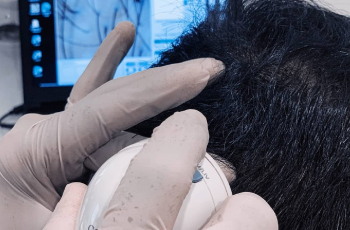
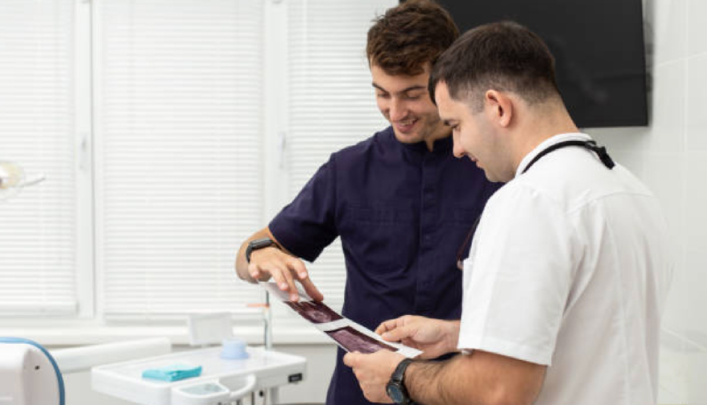
A: Clinicians will take a medical history, examine the scalp and hair shafts, and then be using trichoscopy or dermoscopy to assess miniaturization and density, and take standardized photos for checking baseline to see how the patient is doing in follow up sessions.
How do labs specialize in the lab diagnostic treat the accurate to the degree?
Which Tests refines the clinical diagnosis?
Q: do you need to have blood tests?
A: Selective labs-i.e: iron-ferritin, thyroid panel, vitamin d and androgens where indicated-evaluate overlapping issues that potentially can compound the appearance of thin. They are often not essential but they are helpful in facilitating accuracy.
How do clinics keep baseline on you?
Q: What maintains the long-term ongoing monitoring?
- Photo-documentation from a front, side and vertex view in similar light
- Density or diameter mapping measurements for quantification monitoring purposes
- Pull test when diffuse shedding is suspected
Evidence-based in non-surgical management
What medical options actually work?
Q: What treatment method has the strongest support for androgenetic alopecia in Malaysia?
A: Best treatment protocols will involve using in combination a growth stimulator and DHT pathway modulator with scalp care product and possibly procedures to leverage synergy.
What triggers minoxidil?
Q: Should you use topical or oral minoxidil?
- Topical minoxidil for men and women prolongs anagen and thickens shafts. Expect 3–6 months to see early change; continued use maintains gains.
- Low-dose oral minoxidil can help selected patients; clinicians weigh the benefit against side effects and correct use.
What about DHT blockers and anti-androgens?
Q: Which medications affect DHT?
- Men: Finasteride or dutasteride reduce scalp DHT and slow progression. Physicians tailor dose, explain benefits and risks, and monitor effects.
- Women: In select women, spironolactone or cyproterone may benefit. Because systemic treatment requires counseling and contraception, many choose topical minoxidil first.
Which adjuncts to support scalp and hair thickness?
Q: Will shampoos or devices add any value?
- Ketoconazole shampoo reduces inflammation and itch on the scalp.
- Microneedling in-office can boost topical absorption.
- Low level laser therapy (LLLT) devices are an easy maintenance tool.
Where does PRP fit in?
Q: Can PRP in Malaysia provide improved outcomes?
A: Platelet-Rich Plasma concentrates the growth factors in your platelets for injection into thinning areas. Clinics typically provide 3–4 sessions about monthly, then maintenance. PRP is a useful adjunct to medical treatment especially in early to moderate AGA.
What are timelines to expect results?
Q: When will I notice change?
- Months 0–3: shedding stabilized, comfort of scalp improved.
- Months 3–6: early evidence of thickening and coverage.
- Months 6–12: you have observable density and texture improvements.
- Ongoing: maintain therapy to consolidate improvements.
Lifestyle, Scalp Health and Cosmetic Camouflage
What can I do on a daily basis to improve how my hair looks right now?
Q: What works apart from medicines?
A: Managing scalp health, and reducing visual contrast is key. Slight issues with seborrheic dermatitis and/or itching , using UV protection on thinning exposed areas, and using a haircut and color that minimizes blend or display of the scalp is important. Additional options for improvement are hair fibers or tinted sprays for immediate camouflage, and consider Scalp Micropigmentation in Malaysia for long-lasting visual contrast reduction.
When is surgery considered?
Who is a candidate for hair restoration?
Q: When should I consider surgery?
A: After loss is stabilized with medical therapy, there is sufficient hair in donor areas, and expectations are reasonable, surgery can be considered. Surgery is the relocation of permanent donor hair follicles to an area of loss; it will not prevent future loss, therefore ongoing medical therapy is recommended.
What techniques do clinics utilize in Malaysia?
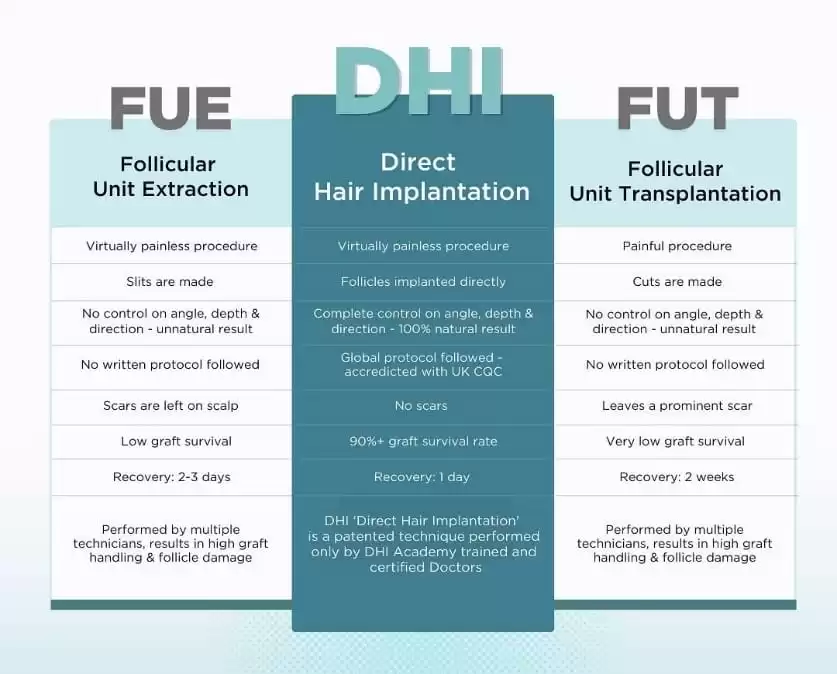
Q: What is the difference between DHI and FUE?
- DHI (direct hair implantation): surgeons implant follicular units (follicles) through an implanter, allowing precise control of angulation, depth, and direction at the time of placement. This instrumented control maintains tighter hairline control and also allows for very dense packing in the areas that are visible.
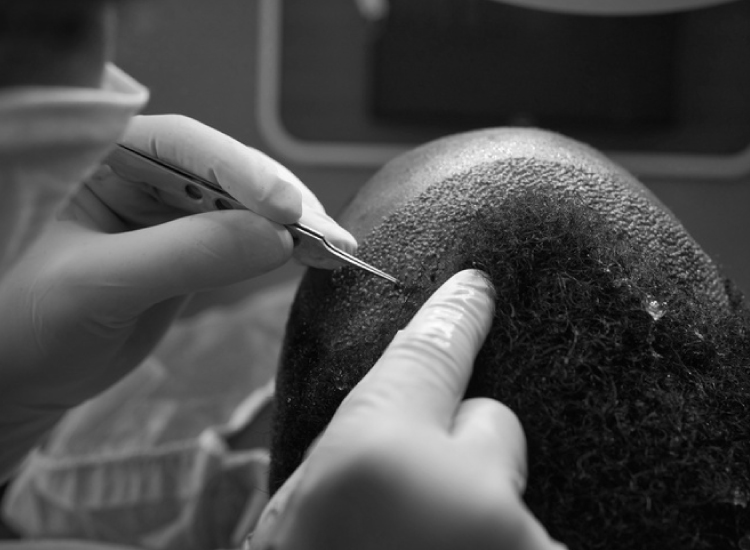
- FUE (follicular unit extraction): surgeons extract grafts through micro-punch excapitilization , make slits (the channels), and then place grafts into those channel slits. FUE is a well-known option for broad coverage where necessary.
What’s the timeline for regrowth after surgery?
Q: When can I expect to see results?
- Weeks 2–4: shed of the transplanted hair (temporary).
- Months 3–4: early regrowth appears.
- Months 6–8: density becomes apparent.
- Months 12–15: uses maturation and refinement to finish the look.
FAQs
How soon until I see results from minoxidil or finasteride?
A: Expect stabilization in 3 months, visible thickening by 3–6 months, and full cosmetic effect around 12 months with continual use.
Are women able to use finasteride or dutasteride?
A: In specific cases, doctors consider anti-androgen therapy with appropriate counseling and contraception. Most start with topical minoxidil and will later consider systemic if other treatments fail.
Is PRP worth adding in?
A: Usually, yes. PRP offers a density and quality improvement, especially in early or moderate AGA, and in conjunction with standard therapy.
Conclusion
What should you do next in Malaysia?
Q: How do you get to action from here?
A: Book a consultation with a doctor to obtain a solid diagnosis, reliable staging, and baseline photographs. Then create a custom plan that stacks evidence-based medication with focused procedures where indicated. And, follow through on your schedule, follow-up as directed and adjust as the pattern changes. To begin a formal evaluation and identify candidacy for DHI or FUE, please visit DHI Malaysia – Hair Transplant Kuala Lumpur.