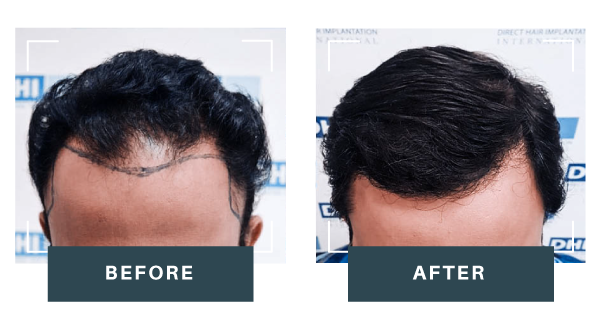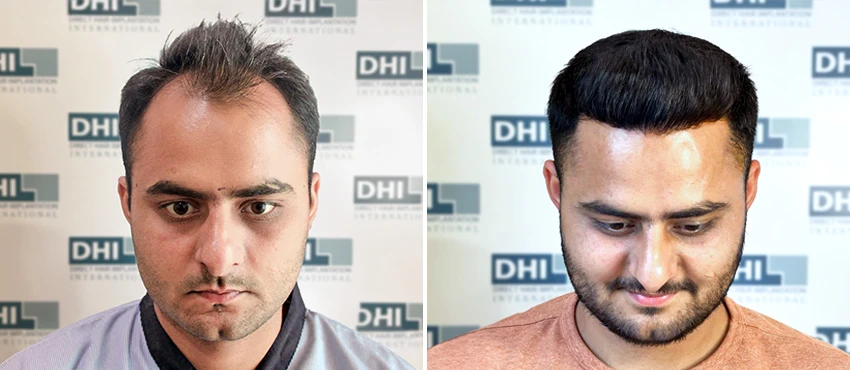
Many patients researching a hair transplant Malaysia procedure and searching for the best hair transplant in Malaysia focus on one goal: achieving the lowest and densest possible hairline. At first glance, this seems perfectly reasonable. After all, a lower hairline often creates a younger appearance and can dramatically improve confidence. However, what looks impressive immediately after surgery may not remain attractive ten or twenty years later.
Can a hairline be too low? Why do some patients require corrective surgery years after their first transplant? Why do certain hair transplants age naturally while others become obvious over time?
The answer lies in long-term planning. A successful hair transplant Malaysia procedure is not simply about restoring hair today. Instead, it involves creating a result that continues to look natural as the patient ages and hair loss progresses. This is why experienced surgeons focus on donor preservation, strategic graft allocation, and conservative hairline design rather than chasing unrealistic short-term results.
Patients looking for the best hair transplant in Malaysia should understand that natural results are rarely achieved through aggressive decisions. Instead, they are achieved through careful planning, realistic expectations, and a long-term medical strategy.
In this article, we explore why aggressive hairlines often fail, how poor planning can lead to additional surgery, and why DHI Malaysia prioritizes long-term success over temporary cosmetic impact.
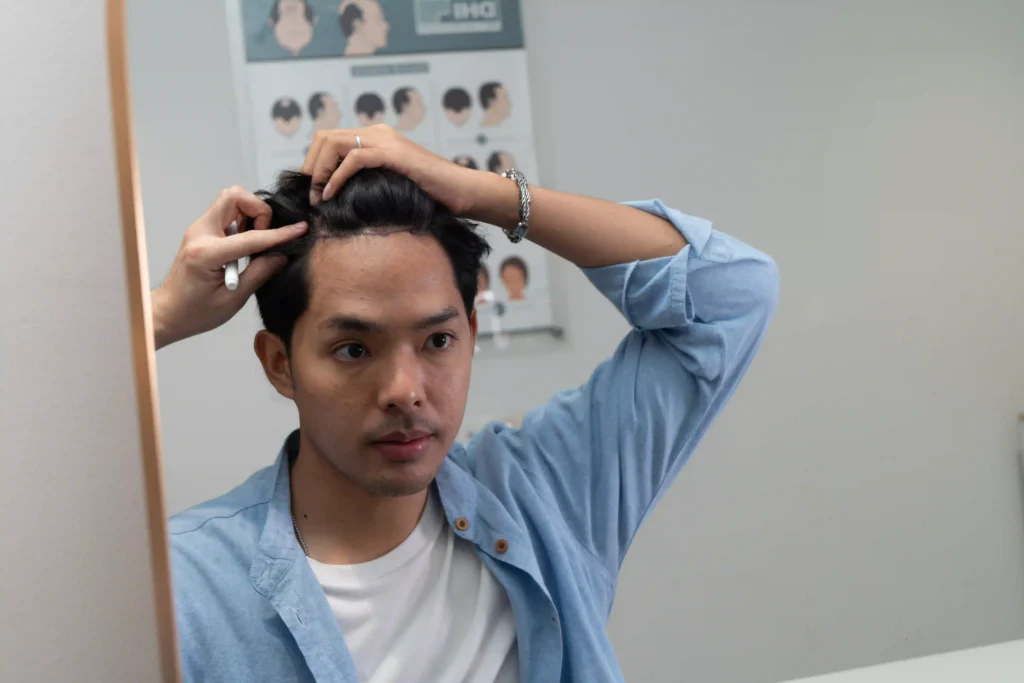
Can a Hairline Be Too Low?
Why Do Many Patients Request Aggressive Hairlines?
Most patients experiencing hair loss want to regain the appearance they had in their late teens or early twenties. Consequently, many request a low, straight hairline because they associate it with youth and attractiveness.
Furthermore, social media, celebrity transformations, and heavily edited marketing photos often reinforce unrealistic expectations. As a result, patients frequently believe that lower automatically means better.
However, experienced hair restoration doctors understand that recreating a teenage hairline on a 40-year-old patient is not always the best approach.
Why Is Lower Not Always Better?
Hairlines naturally mature throughout life. Even men who never experience significant baldness often develop slight recession as they age.
Therefore, creating an extremely low hairline can cause several issues:
• The hairline may appear unnatural later in life
• More grafts are required to create density
• Future hair loss can create imbalance
• Donor reserves may become depleted
Consequently, successful hair transplant Malaysia planning focuses on age-appropriate design rather than creating the lowest possible hairline.
Many of the clinics considered among the best hair transplant in Malaysia providers focus on creating a hairline that will continue to look natural twenty years later, rather than simply creating the most dramatic immediate transformation.
Why Aggressive Hairline Design Creates Problems
What Is Considered an Aggressive Hairline?
An aggressive hairline typically includes:
• Very low placement
• Straight frontal borders
• Minimal recession at the temples
• High density concentrated in the front
Initially, these designs may appear impressive. However, long-term challenges often emerge.
Why Do Aggressive Hairlines Often Age Poorly?
Hair loss is progressive. Therefore, while the transplanted hairline remains stable, surrounding native hair may continue to thin.
As a result, patients may eventually develop:
• Dense frontal hair with thinning behind
• Isolated hairline appearance
• Unnatural facial proportions
• Increased need for future procedures
Because of these risks, experienced hair transplant Malaysia specialists generally avoid aggressive designs unless clinically appropriate.
The best hair transplant in Malaysia is not necessarily the one that creates the lowest hairline. Instead, it is the one that produces results that remain balanced, natural, and sustainable over time.
Excessive Graft Requirements: The Hidden Cost of Low Hairlines
How Many Additional Grafts Does a Low Hairline Require?
Many patients do not realize how dramatically graft requirements increase when a hairline is lowered.
Even reducing a hairline by a small distance can significantly expand the restoration area.
This means:
• More grafts are required initially
• Higher density must be maintained
• Donor reserves decrease faster
Consequently, a low hairline often consumes resources that may be needed later.
Why Does Graft Consumption Matter?
Every hair transplant Malaysia procedure relies on a limited donor supply. Unlike transplanted hair, donor reserves cannot be replenished.
Therefore, excessive graft usage may lead to:
• Reduced future options
• Greater risk of donor depletion
• Difficulty addressing future hair loss
• Increased likelihood of additional surgery
For this reason, strategic graft management remains a cornerstone of modern hair restoration.
Poor Aging of Results: Looking Good Today Versus Looking Good Forever
Should Hairlines Be Designed for the Future?
Absolutely.
One of the biggest mistakes in hair restoration is focusing exclusively on immediate cosmetic improvement.
Instead, surgeons must ask:
• How will this hairline look in ten years?
• What happens if hair loss progresses?
• Will donor reserves remain sufficient?
By answering these questions early, doctors can create more sustainable results.
What Happens When Hairlines Do Not Age Well?
Patients with poorly planned hair transplant Malaysia procedures may experience:
• Visible gaps behind the hairline
• Imbalanced density
• Artificial appearance
• Need for corrective surgery
Therefore, successful hair restoration requires future-oriented thinking rather than short-term decision-making.
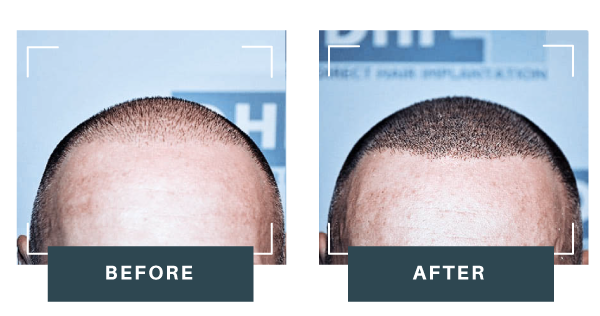
Why Conservative Hairlines Often Age Better
What Defines a Conservative Hairline?
A conservative hairline is not a weak hairline. Rather, it is a strategically designed hairline that respects facial anatomy and future hair loss progression.
Characteristics include:
• Age-appropriate positioning
• Natural recession patterns
• Soft transitions
• Facial harmony
What Are the Benefits of Conservative Planning?
Patients often enjoy:
• A more natural appearance
• Better donor preservation
• Improved flexibility
• Reduced need for future procedures
• Superior long-term aesthetics
Consequently, conservative designs frequently outperform aggressive designs over time.
This is one reason why many specialists consider long-term planning to be a defining characteristic of the best hair transplant in Malaysia. A hairline that continues to look natural as the patient ages is often far more valuable than an aggressive design that requires correction later.
Poor Planning and Inadequate Graft Distribution
Can the First Surgery Use Grafts Inefficiently?
Yes.
Many disappointing outcomes are not caused by poor growth. Instead, they result from poor planning.
A surgeon may transplant thousands of grafts successfully and still create a suboptimal result if those grafts are distributed incorrectly.
Why Does Strategic Graft Placement Matter?
An effective hair transplant Malaysia strategy requires careful consideration of:
• Hairline priorities
• Crown restoration
• Density distribution
• Future hair loss progression
Without strategic planning, valuable grafts may be wasted in areas that provide limited visual impact.
Common Planning Mistakes
Examples include:
• Dense frontal hairline with an empty crown
• Uneven density distribution
• Over-concentration in one area
• Failure to anticipate future hair loss
These mistakes frequently increase the likelihood of requiring a second procedure.
Hairline Versus Crown: Where Should Grafts Be Prioritized?
Why Is Graft Allocation So Important?
The crown typically requires significantly more grafts than most patients expect.
Meanwhile, the frontal hairline creates the greatest visual impact.
Therefore, surgeons must carefully balance these competing priorities.
How Do Experienced Doctors Make These Decisions?
Experienced hair transplant Malaysia specialists evaluate:
• Severity of hair loss
• Donor availability
• Patient goals
• Future progression risk
This allows them to allocate grafts efficiently while preserving future treatment options.
Donor Area Management: Protecting Your Future
Why Is the Donor Area So Valuable?
The donor area is the foundation of every successful hair transplant Malaysia procedure.
Because donor follicles are limited, every extraction decision matters.
What Happens When Donor Areas Are Overharvested?
Potential consequences include:
• Patchy appearance
• Visible thinning
• Reduced donor density
• Limited future procedures
Unfortunately, donor depletion can permanently compromise future treatment options.
Why Does DHI Malaysia Emphasize Donor Preservation?
DHI Malaysia prioritizes:
• Conservative harvesting
• Long-term planning
• Efficient graft allocation
• Future restoration flexibility
This approach helps maximize lifetime donor resources. Patients searching for the best hair transplant in Malaysia should pay close attention to donor management policies because poor donor preservation can limit treatment options for life.
How DHI Malaysia Approaches Long-Term Hairline Planning
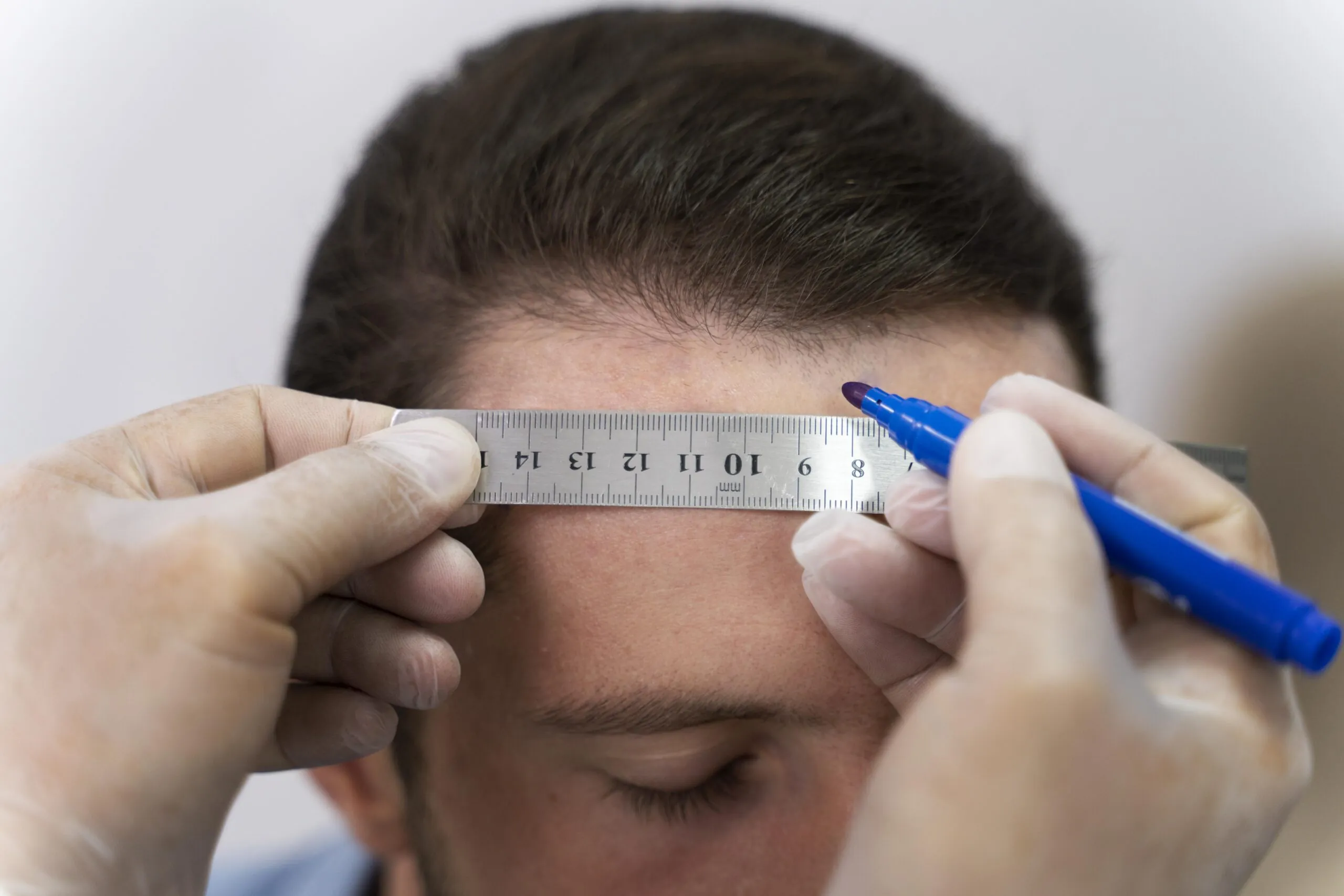
Why Does DHI Malaysia Favor Natural Hairlines?
At DHI Malaysia, doctors understand that successful hair restoration requires more than immediate cosmetic improvement.
Therefore, treatment plans focus on:
• Facial proportions
• Future hair loss progression
• Donor preservation
• Natural aging
As a result, patients receive realistic recommendations designed for long-term success.
Patients seeking the best hair transplant in Malaysia often prioritize natural-looking outcomes, donor preservation, and physician-led planning. These factors play a critical role in achieving results that remain aesthetically pleasing for decades.
Why Does Doctor-Led Planning Matter?
Doctors evaluate:
• Current hair loss
• Hair characteristics
• Donor quality
• Family history
• Long-term goals
Consequently, every hair transplant Malaysia treatment plan is individualized.
DHI Malaysia follows internationally recognized protocols established by DHI International and aligns with global hair restoration standards promoted by the ISHRS.
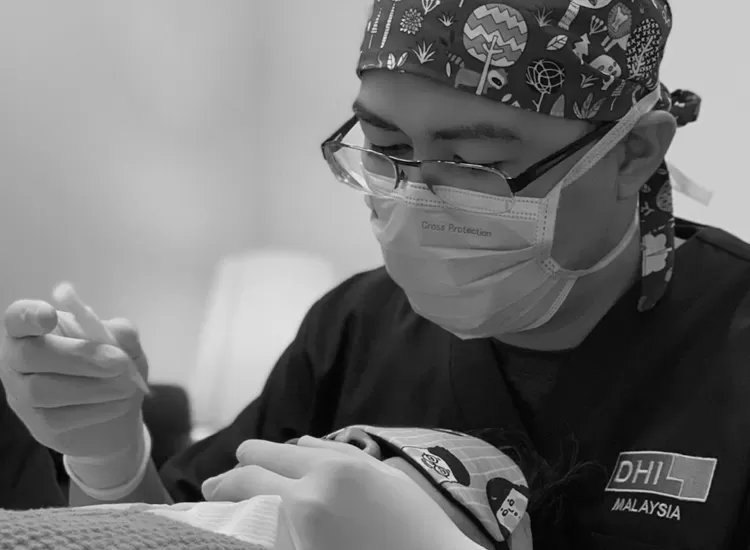
How the DHI Technique Supports Better Long-Term Results
Why Does Precision Matter?
The DHI technique allows doctors to control:
• Angle
• Direction
• Depth
• Density
This level of precision helps create natural growth patterns and efficient graft utilization.
What Benefits Does DHI Offer?
Patients may benefit from:
• Natural hairlines
• Better graft survival
• Reduced trauma
• Improved donor management
• Long-lasting results
Therefore, DHI supports both immediate cosmetic improvement and long-term sustainability.
Frequently Asked Questions
Can an Aggressive Hairline Be Corrected?
Yes, although corrective procedures can be complex and often require additional donor resources.
Is a Lower Hairline Always Better?
No. The best hairline is one that remains natural as the patient ages.
Why Do Some Patients Need Additional Grafts Later?
Progressive hair loss, poor planning, and donor management issues are common reasons.
How Does DHI Malaysia Design Hairlines Differently?
DHI Malaysia emphasizes doctor-led planning, natural proportions, and long-term sustainability rather than aggressive cosmetic designs.
Conclusion
A successful hair transplant Malaysia procedure is not measured by how low the hairline sits or how many grafts are transplanted. Rather, true success is determined by how natural the result looks over time.
This is why patients searching for the best hair transplant in Malaysia should focus not only on graft numbers and immediate cosmetic improvement but also on long-term strategy, donor management, and natural hairline design.
Aggressive hairlines, poor graft distribution, and inadequate donor management may create impressive short-term results. However, they often lead to long-term challenges and additional surgery.
In contrast, conservative planning, strategic graft allocation, and donor preservation create sustainable results that continue to look natural for many years. This philosophy lies at the heart of DHI Malaysia’s approach to hair restoration, helping patients achieve results that not only look good today but continue to look good tomorrow.